Aesthetic irregularities
Correction of humped bridge, wide nose, asymmetry, downward or upward pointing nasal tip.
The goal of rhinoplasty is to harmonize facial proportions, while maintaining or improving the nose’s respiratory function.
Personalized planning
Each procedure is based on personalized planning. Anatomical features, facial character and patient expectations together determine the final form. During consultation, we thoroughly discuss the possibilities, expected results, as well as the procedure and its risks.
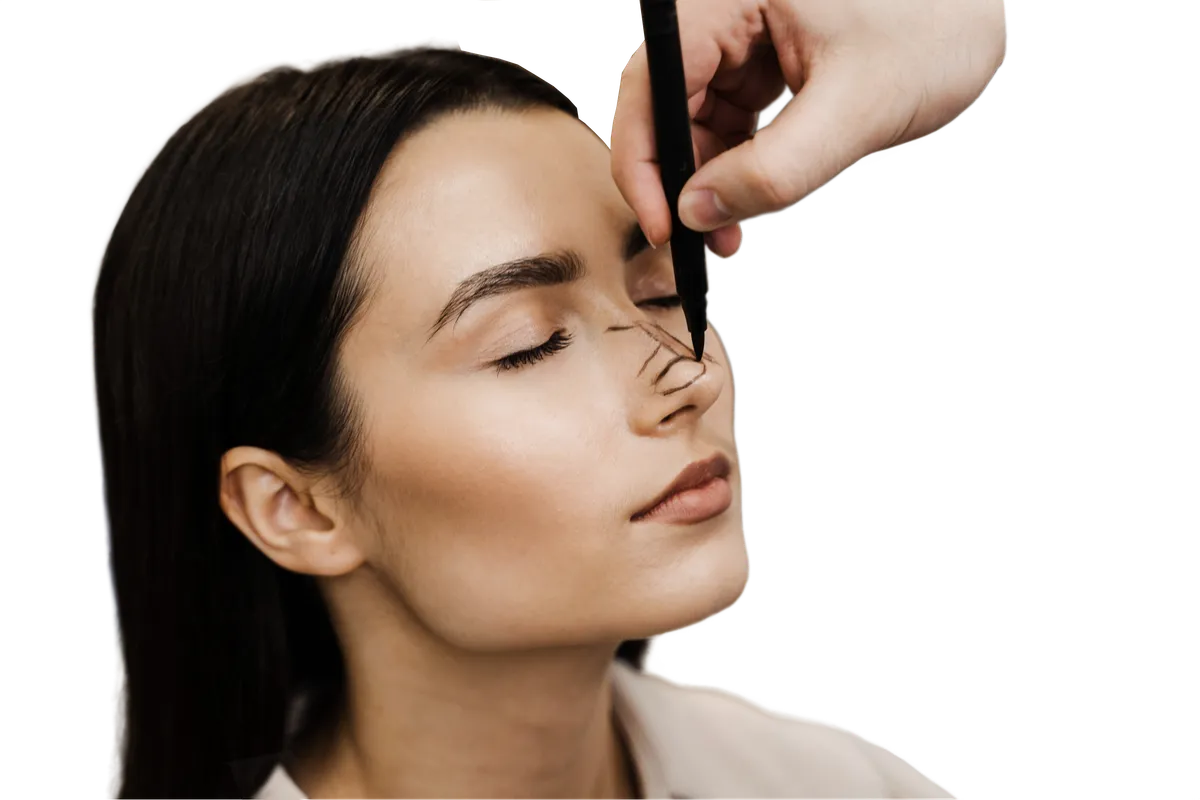
Correction of humped bridge, wide nose, asymmetry, downward or upward pointing nasal tip.
Impaired nasal breathing, deviated septum, consequences of previous injuries.
In revision rhinoplasty cases, the aesthetic or functional results of previous procedures can be improved.
The procedure
Rhinoplasty typically takes 3–4 hours. The procedure is almost always performed under general anesthesia.
Surgery is almost always performed under general anesthesia.
Reshaping of the bony and cartilaginous framework of the nose, with septum correction if necessary.
At the end of the procedure, external splint placement, which remains on the nose for approximately 1 week.
Regular follow-up examinations to monitor healing and ensure beautiful results.
Technique
The way the nasal bone is shaped defines how quickly you heal and how natural the result looks. Dr. Varga Klára works with two modern approaches that put precision and tissue protection first.
The practice uses the Mectron Piezosurgery Flex, a piezoelectric ultrasonic bone-surgery instrument. Ultrasound shapes the bone with millimetre precision while leaving the soft tissues — skin, cartilage and mucosa — untouched. Less tissue trauma typically means less swelling and bruising, and a smoother recovery.
Where the anatomy allows, the natural line of the nasal bridge is preserved rather than removed and rebuilt — avoiding the artificial, “scooped-out” look. Dr. Varga Klára trained in this technique at an international dorsal preservation course in Coventry, led by renowned European rhinoplasty surgeons.
Read more about the ultrasonic instrument
See the itemised price list
Healing and recovery
Follow-up examinations and adherence to instructions are essential prerequisites for beautiful and lasting results. The final shape develops fully over 12–18 months.
Rhinoplasty is not a template procedure. The goal is always to preserve the natural proportions of the face and achieve a harmonious, personalized result.
From consultation to full recovery
This guide helps you see clearly how the process unfolds, from the consultation all the way to the final result. Every patient is unique, so the order and details of the steps may vary slightly, but the framework is the same: safety, predictability, and a calm decision.
The journey from the pre-operative consultation to the final result consists of five main stages. The purpose of each step is to move forward safely, transparently, and with realistic expectations.
The purpose of the consultation is to understand your ideas and to clarify together what is professionally realistic and sustainable in the long term. We go through the key questions: what bothers you, what change you would like, and whether you have any functional complaints (such as impaired nasal breathing). We also discuss the options, the expected recovery and the risks. By the end of the consultation, I want you to have a clearer picture and to be able to decide calmly.
After the consultation, you typically take this with you: an outline of a clear plan, the next steps, and the main points of preparation.
In the planning stage, the goal is to refine the proportions and the details. This is where the surgical plan comes together — one that fits your individual features, facial character and expectations. If there is also a functional issue, the emphasis is placed not only on aesthetics but on breathing and stability as well.
In this stage we clarify: what change can be expected, with what compromises, and over what time frame the more final result will develop.
The day of surgery is a well-organized, carefully structured process. The goal is for everything to take place in a safe, calm environment, with you knowing exactly what comes next. After surgery, you receive a detailed guide on what to do (rest, cooling, medication, sleeping position, wound and dressing care), as well as the schedule of follow-up visits.
Important: in the first days, swelling and a feeling of uncertainty are completely natural. At this point we are not yet looking at the “result” — we are supporting safe healing.
Follow-up visits exist so that we can accompany your healing throughout, and respond in time if any question or uncertainty arises. Recovery has a well-known “rhythm”: at first there is more swelling, and later the shape gradually refines. This is also when we discuss when you can safely return to work, sports and travel, and when it is advisable to wear glasses again.
Most patients experience this: improvement is visible early on, but the details take shape slowly — great patience is needed.
The shape of the nose is not “finished” overnight; it settles gradually. The 6–12 month period is important because this is when most of the tissues truly calm down, and the fine details become visible. The goal here is no longer dramatic change, but a natural overall picture: proportion, character, a stable result.
Good to know in advance: the most beautiful results are built on patience and realistic expectations.
Consultation
The first 15-minute introductory consultation is free. We will discuss what is on your mind and which options may suit you.
Prefer to talk? +36 30 219 2311